Buyer resource · RFQ guide
How to spec a fitted equipment cover.
A useful RFQ defines the machine shape, operating access, exposure, material and fastening method before the first sample. The goal is a cover that fits the real equipment and can be repeated in bulk production.
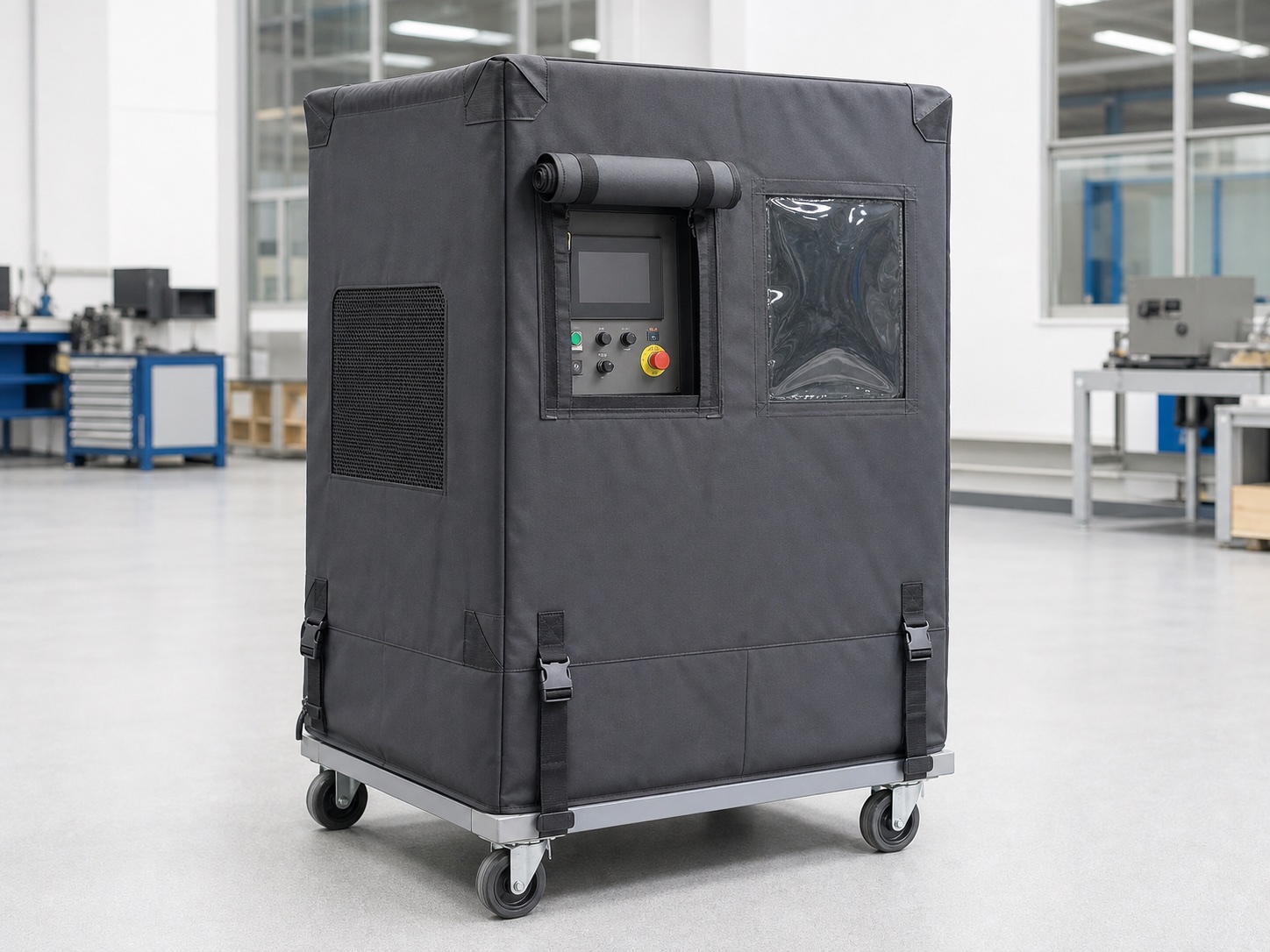 CUSTOM EQUIPMENT COVER RFQ
RFQ inputs
Five details decide whether the cover works.
Photos are often more useful than a long description. Mark the access side, protrusions and cable routes directly on the image when possible.
Material direction
Match the cover material to the exposure.
Do not request only “waterproof fabric” or “PVC.” A better RFQ explains whether the cover protects against dust, rain, splash, abrasion, UV, oil contact, visibility needs or frequent handling.
Good starting point for sewn dust covers, light splash protection and branded equipment storage.
Better fit for water-resistant, wipeable and heavier-duty industrial equipment covers.
Useful for viewing windows, labels, displays or inventory checks without removing the cover.
Consider when airflow, heat release or condensation control matters.
Sample approval
Approve the cover on the real equipment.
A fitted equipment cover should be checked on the actual machine, cart or control unit before bulk production. Record any change as a dimension, material or construction note.
01The cover fits around protrusions without stretching or twisting.
02Operators can reach required access points without removing the whole cover.
03The fastening method holds the cover in the expected storage or transport position.
04Clear windows, vents and cable openings are in the right locations.
05Edge binding, corners and wear areas are reinforced where handling is frequent.
06Material, color, logo position, packing and finished dimensions are recorded for repeat orders.
Copy this RFQ structure
A clear equipment cover inquiry can be short.
Equipment: [machine/cart/control unit]
Dimensions: [W x D x H plus protrusions]
Access: [doors, screens, vents, cables]
Environment: [dust, splash, indoor, outdoor, UV, oil contact]
Material preference: [Oxford, vinyl-coated fabric, clear PVC/window]
Fastening: [grommets, straps, zipper, elastic, hook-and-loop]
Quantity: [first order and annual volume]
Branding/packing: [logo, labels, carton requirements]
Request an initial review
Send the equipment photos, dimensions and use environment.
We can review whether the project fits sewn equipment-cover construction and identify what should be confirmed before sampling.