Boat & yacht applications

Marine covers and onboard storage, developed around the way they fit.

Explore custom sewn-product development for boat equipment, fender sleeves and cockpit storage. Start with a photo or drawing; material, fit and exposure requirements are reviewed before sample approval.

Marine application 01

Winch and deck equipment covers

A fitted storage cover starts with the exact winch or windlass model, its profile and base opening. Plan retaining points, protrusions and removal before operation.

01Equipment model and dimensioned photos
02Base opening, closure and retaining points
03Storage exposure and cleaning requirements

Marine application 02

Boat fender covers and fender socks

Develop a textile sleeve around the fender shape, working length and rope passages. Review the contact fabric and seam position against the hull finish. A sleeve does not replace the fender itself.

01Fender shape, diameter and working length
02Rope openings and closure positions
03Wet rubbing, colour transfer and fit after washing

Marine application 03

Rope bags and cockpit organizers

Sheet bags and halyard bags organize loose line ends aboard sailing boats. Define capacity, mounting and drainage around the cockpit layout. Storage bags are separate from load-bearing rope protection.

01Rope diameter, length and storage capacity
02Mounting surface and attachment method
03Drainage, access and removable compartments

Cover construction

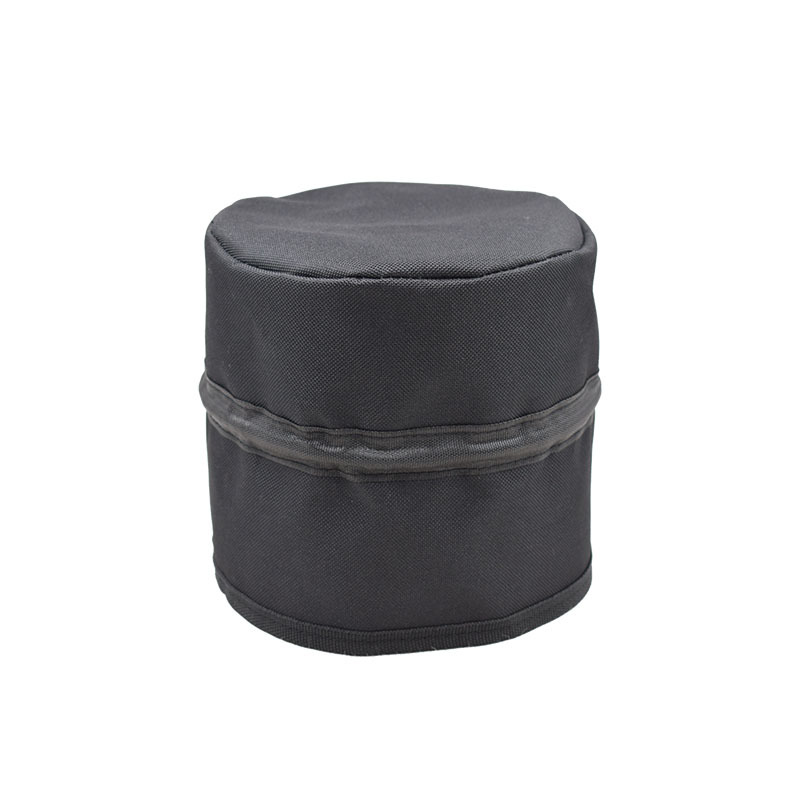
Black cylindrical fabric cover with a circular top seam

A cylindrical cover as a pattern starting point.

The circular top and sewn side wall illustrate a compact slip-over construction. The target equipment determines the final dimensions, base closure and fixing method.

Review the fit on the specified part before approval. Fabric selection and exposure performance are project-specific.

Explore fitted equipment cover construction →

Define the marine use before choosing the material.

Contact surfaceState the hull or equipment finish, seam contact and cleaning method. Check wet rubbing and colour transfer on the target surface.
ExposureSpecify storage location, sun exposure, spray and drainage. Material names alone do not establish UV resistance or waterproof performance.
Fit approvalConfirm openings, fixing, dimensional tolerance and fit after cleaning using the approved prototype.
Production briefShare quantity by size, branding, packing and any required test criteria. A project review confirms feasibility and commercial terms.

Prepare your brief

Measure the object and the access points together.

Measurement checklist →

Marine sewn-product review

Send the part, fit problem and expected use.

A photo, dimensions or reference link can start the review. Final material and construction follow the agreed brief and approved sample.

FASTEST WAY TO STARTSend one photo or product link.

No form, drawing or complete specification required.

Or send a 30-second written inquiryOnly 3 items are required

Photos, dimensions and detailed specifications can follow later.